Skip to content



When a project requires excavation work, a question frequently comes up among contractors, engineers, and project managers : should hydro-excavation or traditional mechanical excavation be used ? This choice is not insignificant. It directly impacts site safety, the protection of underground infrastructure, project timelines, and overall costs. At Sanivac, we support our clients daily in making this type of decision. Thanks to our field expertise and specialized fleet, we use hydro-excavation when precision, safety, and risk control are top priorities.
Understanding mechanical excavation
Mechanical excavation relies on the use of heavy equipment such as excavators, backhoes, or loaders. This method is fast and efficient for moving large volumes of soil, particularly during earthworks or excavation in open areas. However, mechanical excavation offers limited precision when working near pipes, cables, or buried infrastructure. The risk of accidental damage is real, especially when the exact location of underground networks is uncertain or when multiple lines intersect.
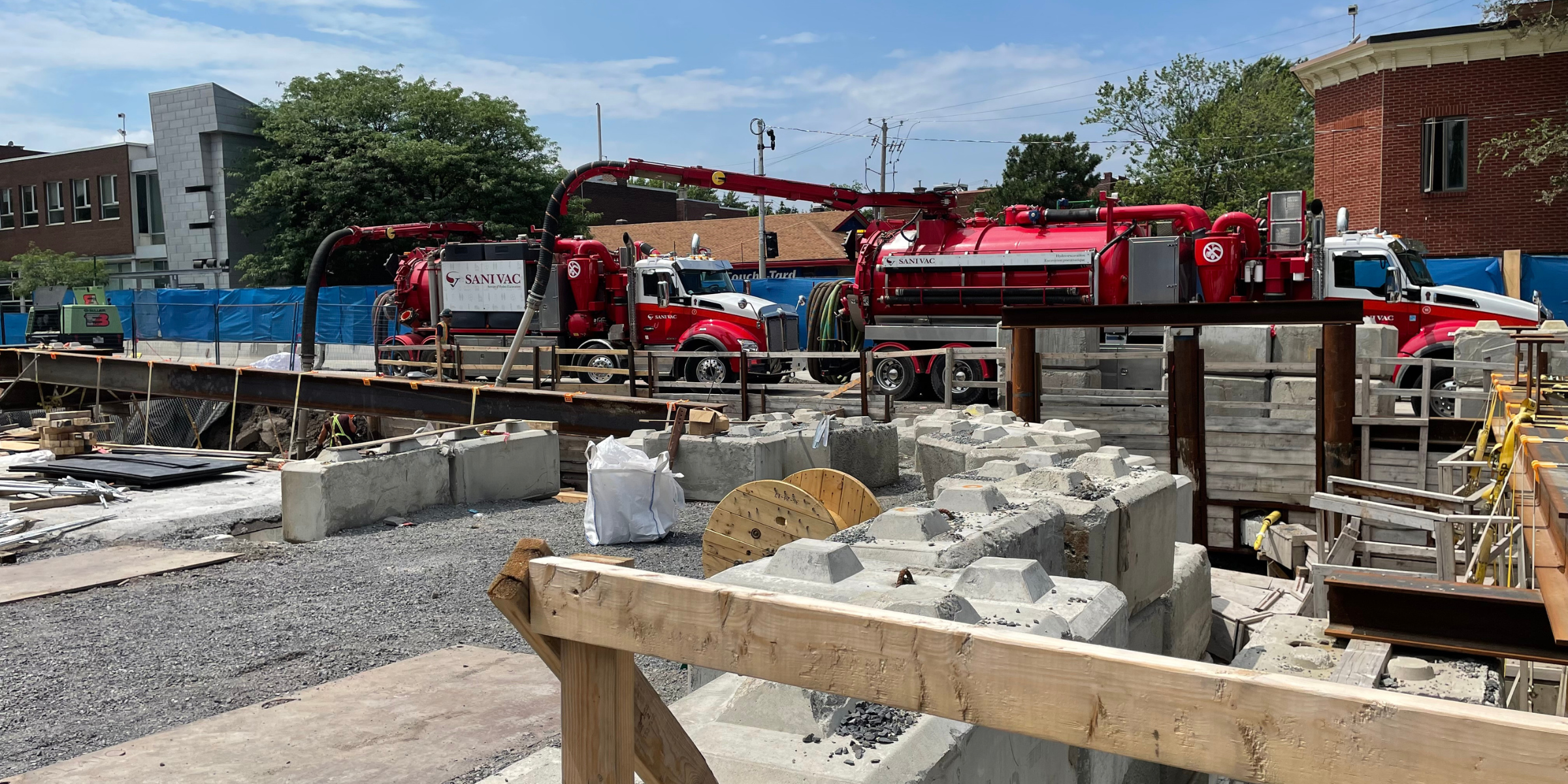
What sets hydro-excavation apart ?
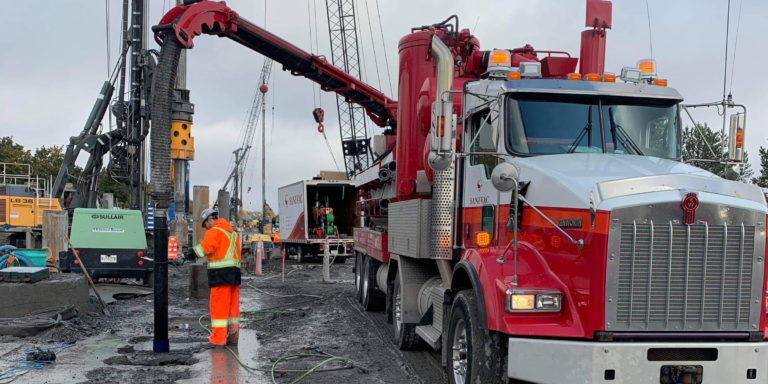
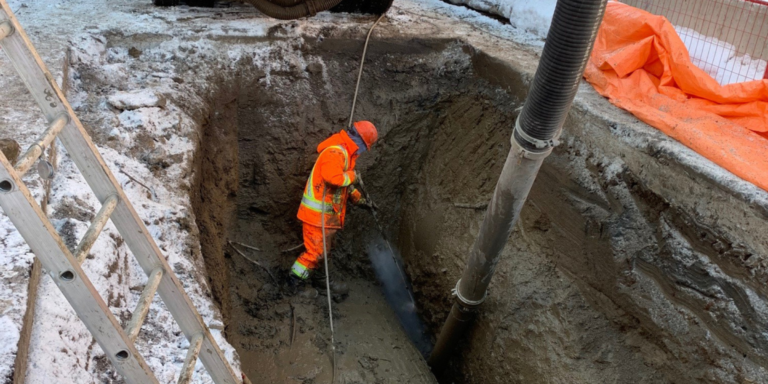
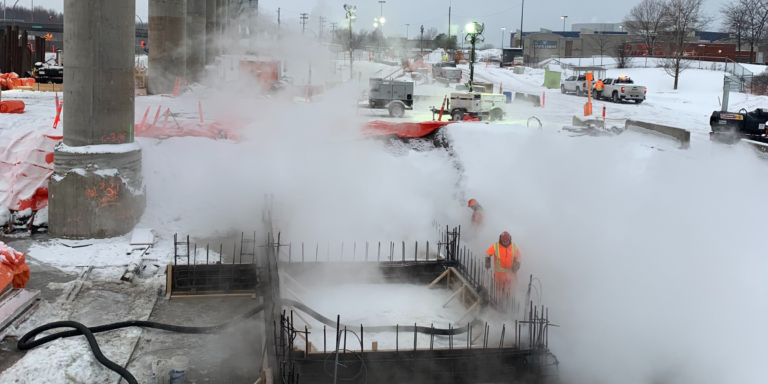
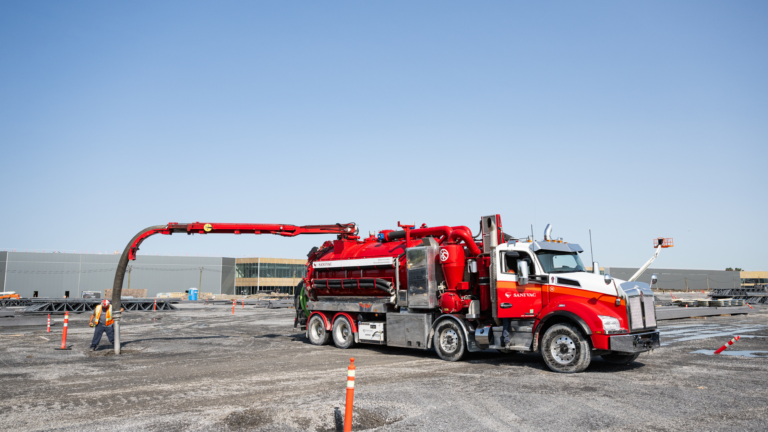
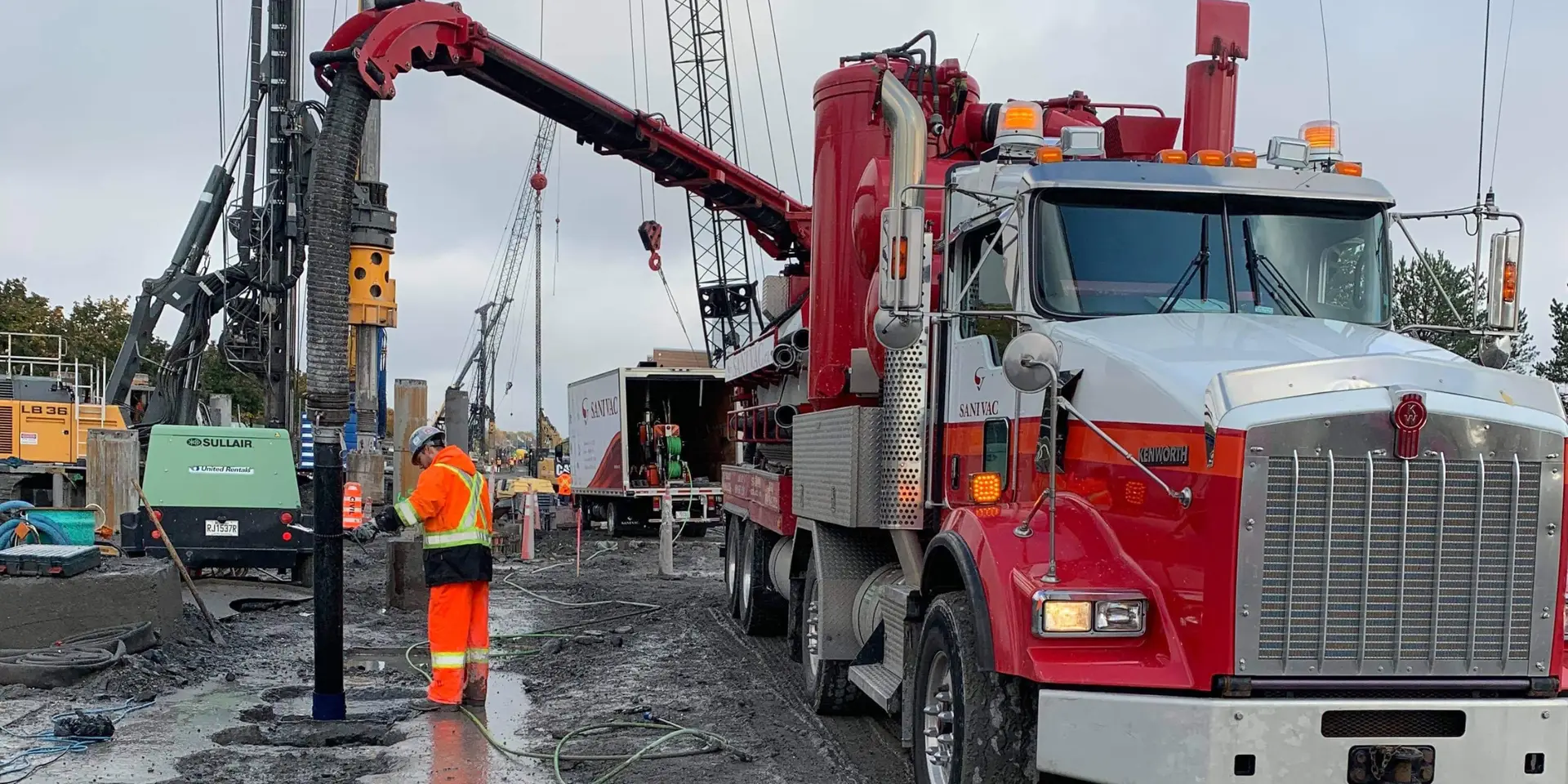
Hydro-excavation relies on a completely different approach. It combines the use of pressurized water to loosen the soil and a powerful vacuum system to remove the excavated material. This method allows soil to be removed in a controlled manner, layer by layer, without direct mechanical contact with underground infrastructure. Unlike mechanical excavation, hydro-excavation is considered a non-destructive method, making it a preferred solution in sensitive environments.
Comparison in terms of precision and safety
The main difference between the two methods lies in precision. Mechanical excavation is effective for general work, but it carries a higher risk of damage when used near underground networks. Hydro-excavation, on the other hand, allows for the precise location and exposure of water, sewer, and gas lines, as well as fiber optics and electrical networks, without causing damage. This level of precision significantly reduces the risk of accidents, leaks, or service disruptions.
Impact on costs and timelines
At first glance, mechanical excavation may seem more cost-effective. However, when damage occurs, the costs associated with repairs, service interruptions, and delays can quickly outweigh the initial savings.
Hydro-excavation often helps reduce the overall cost of a project by avoiding :
- unexpected repairs,
- penalties related to service interruptions,
- site delays.
That’s why it is increasingly used in urban, municipal, and industrial projects.
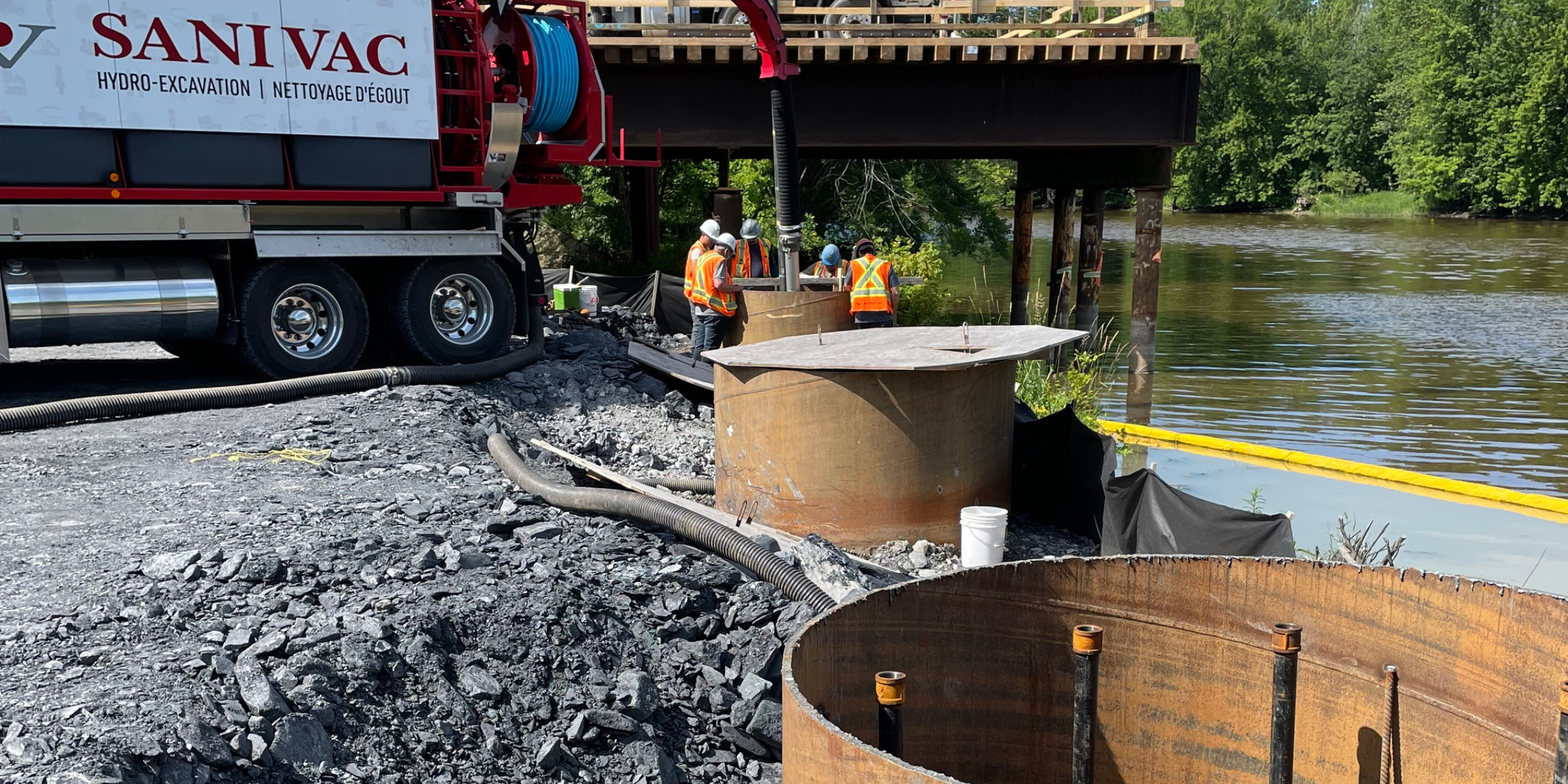
Choosing the right method based on the context
Mechanical excavation remains relevant for large-scale work in open areas where the risk of damage is low. However, hydro-excavation is strongly recommended when :
- underground networks are numerous or poorly documented,
- precision is essential,
- worker and public safety is a priority,
- the consequences of damage would be significant.
At Sanivac, we analyze each project to recommend the method best suited to its technical and operational constraints.
Why Sanivac prioritizes hydro-excavation in sensitive environments
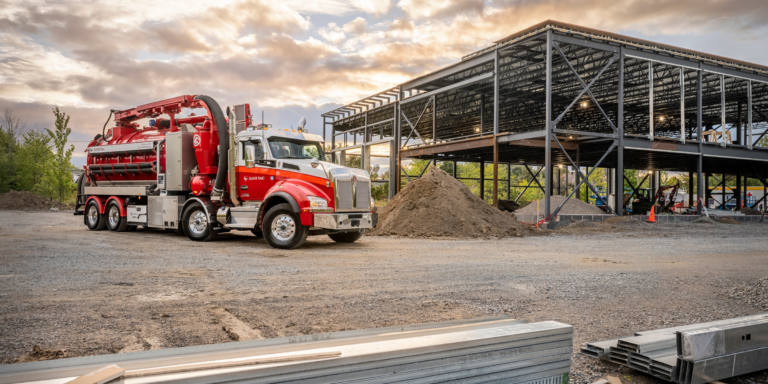
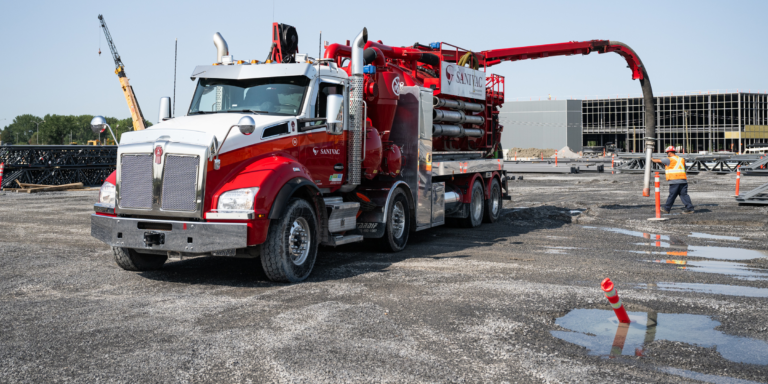
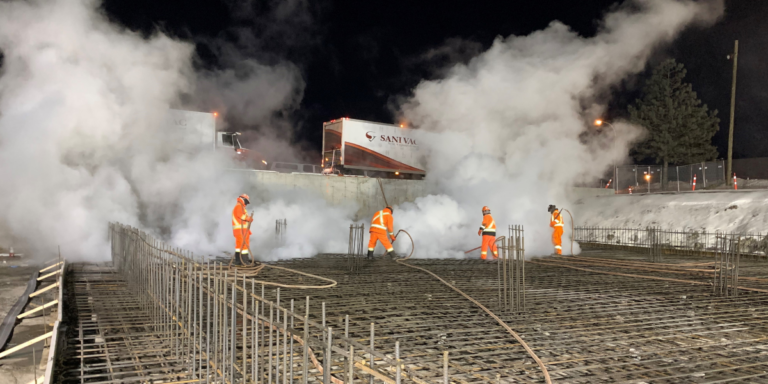
With our fleet of vacuum trucks designed for hydro-excavation, we operate efficiently on complex job sites, in urban or industrial environments. Our approach balances operational efficiency, safety, and the protection of existing infrastructure.
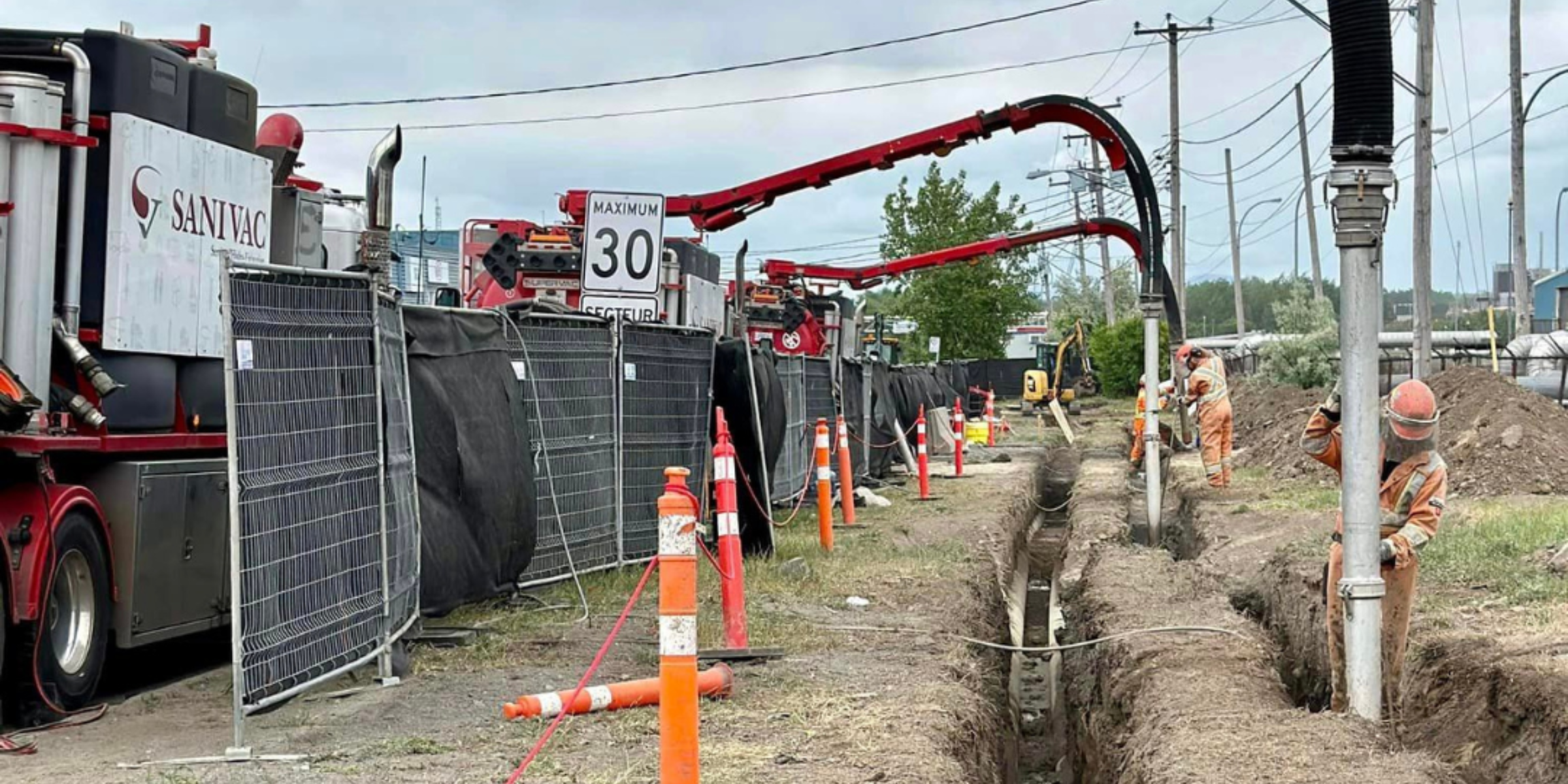
Two methods, two uses
Hydro-excavation and mechanical excavation are not opposing methods, they complement each other. The choice depends on the context, risks, and objectives of the project. When precision, safety, and the protection of underground networks are key, hydro-excavation stands out as the most reliable solution.
Do you have a project that requires precise and safe excavation ? Whether it’s work near underground utilities or a municipal, industrial, or urban project, hydro excavation is a reliable, proven solution. At Sanivac, our specialized teams support you in assessing your needs and planning your work, using high-performance equipment and an approach that meets the strictest standards.